How Casino Signs Balance Wayfinding and Destination Image
Casino signs can guide visitors while expressing a destination’s identity. Learn how clear labels, consistent names, and focused design make signs easier to use.
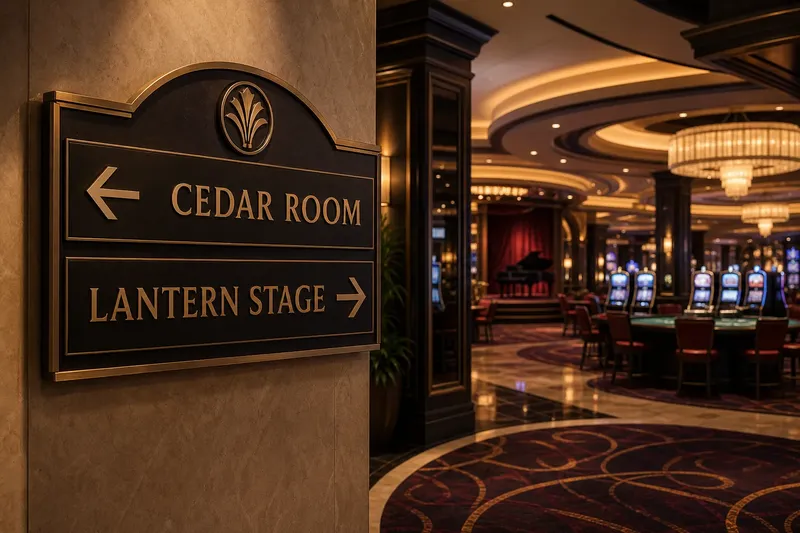
At a casino entrance, a property name may share a wall with signs for the cashier, dining room, and performance space. Casino signs need to make each message easy to recognize without turning every surface into another advertisement.
Which job should each casino sign do?
Start by deciding whether a sign identifies a place, directs someone to it, or promotes an experience. A property name identifies the venue. An arrow and a destination label direct visitors. Promotional wording invites interest but should not replace a clear name or route.
Keep those roles distinct where people make decisions. Use short, familiar words for directions, and reserve distinctive lettering, colors, or motifs for signs whose main purpose is identity. If a sign needs to do two jobs, make the directional information the easiest part to spot.
A compact venue may need only a few destination labels. A property with dining, lodging, and entertainment may need a directory that groups its offerings by name. In either case, list only destinations that visitors can actually reach from that location.
How can a casino sign express identity without becoming hard to read?
Typography, color, and materials can give a sign a recognizable character. Keep the destination name and arrow visually distinct from decorative details. At a decision point, check the sign from the direction a visitor approaches; if glare, low contrast, or ornament hides the wording, simplify the design or change its placement.
Use the same destination name on directories, wall signs, and printed programs. If one sign says “Cedar Room” and another says “Cedar Restaurant,” visitors may not know whether they point to the same place. Choose the name the venue uses and update the sign family to match it.
Elaborate symbolism on every sign is not worth the effort if visitors still have to guess what a label means. A small set of recognizable colors or motifs can establish identity; plain words should carry unfamiliar destinations.
What should you inspect before changing a casino sign?
- Purpose: Check whether the sign identifies the property, directs someone, or promotes an experience. If visitors need a route, add a destination and arrow; if the sign is only branding, keep directional details elsewhere.
- Decision point: Check what choices are available at the location. If two destinations could be confused, name them separately; if there is only one obvious route, avoid adding a crowded directory.
- Destination names: Compare the sign with the venue’s directory and printed materials. If names differ, standardize them; if they match, keep the wording consistent.
- Arrow and route: Follow the indicated path to its destination. If the arrow points toward a different place, correct it or move the sign; if it leads to the named destination, retain it.
- Symbols: Check whether a first-time visitor could interpret each icon. If its meaning is uncertain, add a plain-language label; if the symbol is familiar in that setting, keep it as a supporting cue.
- Visibility: Look for glare, low contrast, blocked sightlines, or decorative clutter from the approach. If any obscures the message, adjust the light, contrast, placement, or design; if the words and arrow stand out, do not add competing decoration.
- Promoted service: Check whether the service named on the sign is available at the indicated destination. If not, correct the message or direct visitors elsewhere; if it is accurate, keep the sign’s claim specific.
Say a fictional venue has a gaming floor, a restaurant named Cedar Room, and a performance space named Lantern Stage. Its directory lists all three, but a sign at the first junction points toward the last two with the vague label “Entertainment.” The venue checks the route, confirms that the restaurant and stage branch in different directions, then replaces the vague label with “Cedar Room” on one arrow and “Lantern Stage” on the other. The expected observable result is two signs whose words match their routes; the tradeoff is less promotional language in exchange for clearer destination choices.
How do casino signs shape a destination’s identity?
A property name, logo, or directory can present gaming, dining, performances, and lodging as parts of one destination. That is a design choice, not a claim that every casino offers the same mix of experiences.
Identity signs work best when their names match the places visitors encounter. A distinctive entrance sign paired with inconsistent room names can create doubt about what is available. Keep the public-facing names accurate, and let directional signs focus on the destination rather than a broad promise.
What do people ask about casino signs?
Why do casino signs mention dining or performances?
A venue may use signs to show that its offerings extend beyond gaming. The wording should name services that are available at that property rather than imply that every casino has the same attractions.
Are decorative casino signs less useful than plain ones?
Not necessarily. Decorative details can reinforce a venue’s identity when the destination name remains easy to read. If the design competes with the words or arrow, simplify that sign.
Should every casino use the same signage style?
No. The style can reflect the venue, while the names and directional cues should remain clear. Choose signs based on the destinations visitors need to recognize at each decision point.
How can a venue check whether its signs are clear?
Walk a route as someone unfamiliar with the venue and note where a choice is required. Ask a newcomer what a sign points toward; if their answer differs from the intended destination, revise the wording, arrow, or placement.
How should a casino update signs when places change?
When a destination is renamed or moved, check its directory entry, nearby directional signs, and printed materials together. Replaceable directory panels can simplify changes, but they still need to match the names used on walls and at entrances.
For casino signs, the main search question is whether each sign identifies the venue or directs visitors to a specific place. Give identity room where people can take in the design, and make the destination name and arrow unmistakable wherever a route choice begins.