How to Care for Casino-Style Green Felt at Home
Casino-style green felt needs gentle cleaning and careful storage. Learn how to remove loose dust, respond to spills, and avoid damage from harsh tools.
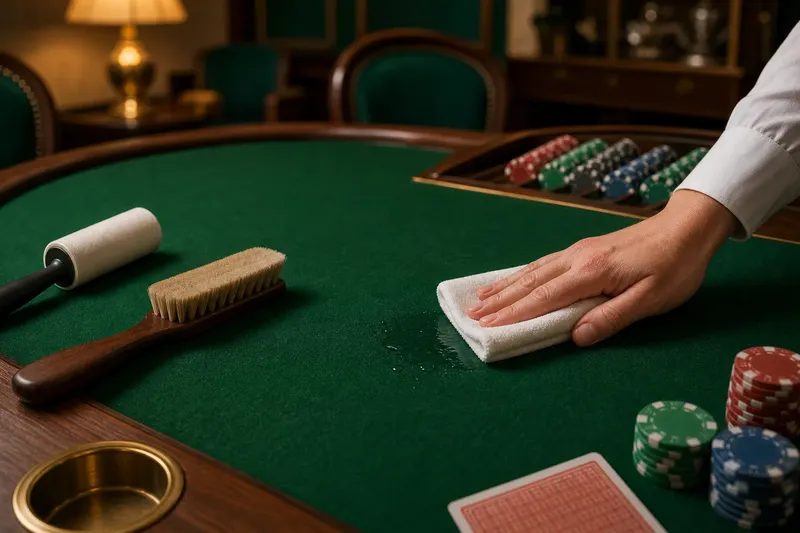
A green felt surface can pick up lint, crumbs, and drink marks during ordinary use. Casino-style green felt is often part of a display, game table, or film-inspired interior, so upkeep should remove dirt without flattening the nap or pulling at seams.
How do you clean casino-style green felt?
Start with the least forceful method. Clear loose objects, then use a clean, soft brush to move dust in one direction. A lint roller can help with surface fibers, but press lightly and lift it straight up rather than dragging it across the cloth.
If you use a vacuum, choose an upholstery attachment and keep suction gentle. Test it on a hidden area first. Do not use a rotating brush head; its bristles can catch threads or disturb the felt’s surface.
- Check for loose dust and crumbs; if debris sits on the surface, brush gently toward an edge, then stop once the visible material is gone.
- Check whether the felt has raised nap or delicate seams; if either is present, use a soft hand brush, then avoid vacuuming near those areas.
- Check a vacuum’s attachment for a rotating brush; if it spins, switch to a nonrotating upholstery tool or skip the vacuum.
- Check the cloth for a hidden test area; if the brush or vacuum changes its texture, stop and continue with lighter hand cleaning.
- Check for loose threads; if you see one, do not pull or trim it, and ask an upholstery or textile professional for advice if it affects use.
- Check whether the felt is attached to a table or removable; if it is fixed in place, avoid soaking it and clean only the accessible surface.
What should you do about a spill?
Blot a fresh spill promptly with a clean, absorbent cloth. Press down gently and lift; rubbing can spread the liquid and rough up the fibers. Replace the cloth area as it becomes damp, and work from the outside of the mark toward its center.
Do not pour water or household cleaner directly onto felt. If the material’s care instructions allow a damp cloth, use very little moisture and test a hidden spot first. Stop if color transfers to the cloth, the surface changes, or the mark spreads.
Say a guest spills a little water near the edge of a felt-covered display table. You blot from the outside inward with a dry, pale cloth, check that no color has transferred, and leave the area uncovered to air-dry. The visible result to look for is a surface that feels dry and has not developed a wider mark; if the stain remains or the fabric changes, avoid further treatment and seek a textile-care professional.
Which cleaners and tools should you avoid?
Skip bleach, stain removers, solvent sprays, and foaming upholstery products unless the manufacturer specifically approves them for that exact felt. These products may alter the color, leave residue, or change the texture. A small test spot can reveal a problem, but it cannot make an unsuitable cleaner safe for the whole surface.
Avoid stiff brushes, abrasive pads, and aggressive scraping. Do not use adhesive tape to lift embedded debris; it can pull fibers from the cloth. If something is stuck, lift only what comes away without force.
It is not worth trying to make felt look newly manufactured by shaving, sanding, or pressing it flat. Those treatments can permanently alter the surface. For a valuable or fitted piece, a conservator or textile professional is a better choice than experimenting with stronger products.
How should felt be protected between uses?
Keep the surface dry and clear of food, drinks, and objects that may snag it. When the felt is part of a table, use coasters nearby rather than placing cups on the playing area. For a removable piece, store it clean and dry, loosely rolled around a broad tube if its construction permits; avoid tight folds that can leave creases.
Keep stored felt away from direct sunlight, damp areas, and dusty workspaces. Use a clean cover that does not shed lint, and make sure the cloth is fully dry before covering it. If the felt belongs to a vintage object or has a maker’s care label, follow that guidance over general advice.
What questions come up about felt upkeep?
Can you use a lint roller on green felt?
Usually, a light touch is the safer approach: test a hidden section, press gently, and lift without dragging. If fibers come away or the texture changes, stop and use a soft brush instead.
Can you wash felt with water?
Do not immerse fitted or backed felt, since water can affect the support and cause uneven drying. Follow the item’s care instructions, and use only minimal moisture on a test area when the manufacturer permits it.
How do you remove lint without damaging the surface?
Brush lightly in one direction with a clean, soft brush, or use a lint roller with minimal pressure after a hidden-area test. Avoid scraping or pulling at fibers that do not lift easily.
When should you call a professional?
Ask a textile-care professional about persistent stains, color transfer, loose seams, valuable vintage pieces, or felt bonded to a surface that cannot be safely removed. Stop home treatment if the cloth changes texture or the mark grows.
How can you tell whether the cleaning worked?
Check the surface in good light. Loose debris should be gone, the felt should feel dry, and its color and texture should look consistent with the surrounding area. If a mark remains, do not repeat a treatment more aggressively; identify the material and care instructions first.
For casino-style green felt, regular gentle dust removal and prompt blotting are usually more useful than elaborate cleaning routines. Keep the cloth dry, skip harsh products, and treat uncertainty as a reason to pause rather than apply more force.